

You’ve probably said it before, or heard someone else say it.
“It physically hurts.”
Most people assume that’s just an expression. Something people say when they’re trying to describe something that’s hard to put into words. It turns out it’s one of the most literally accurate things a person can say.
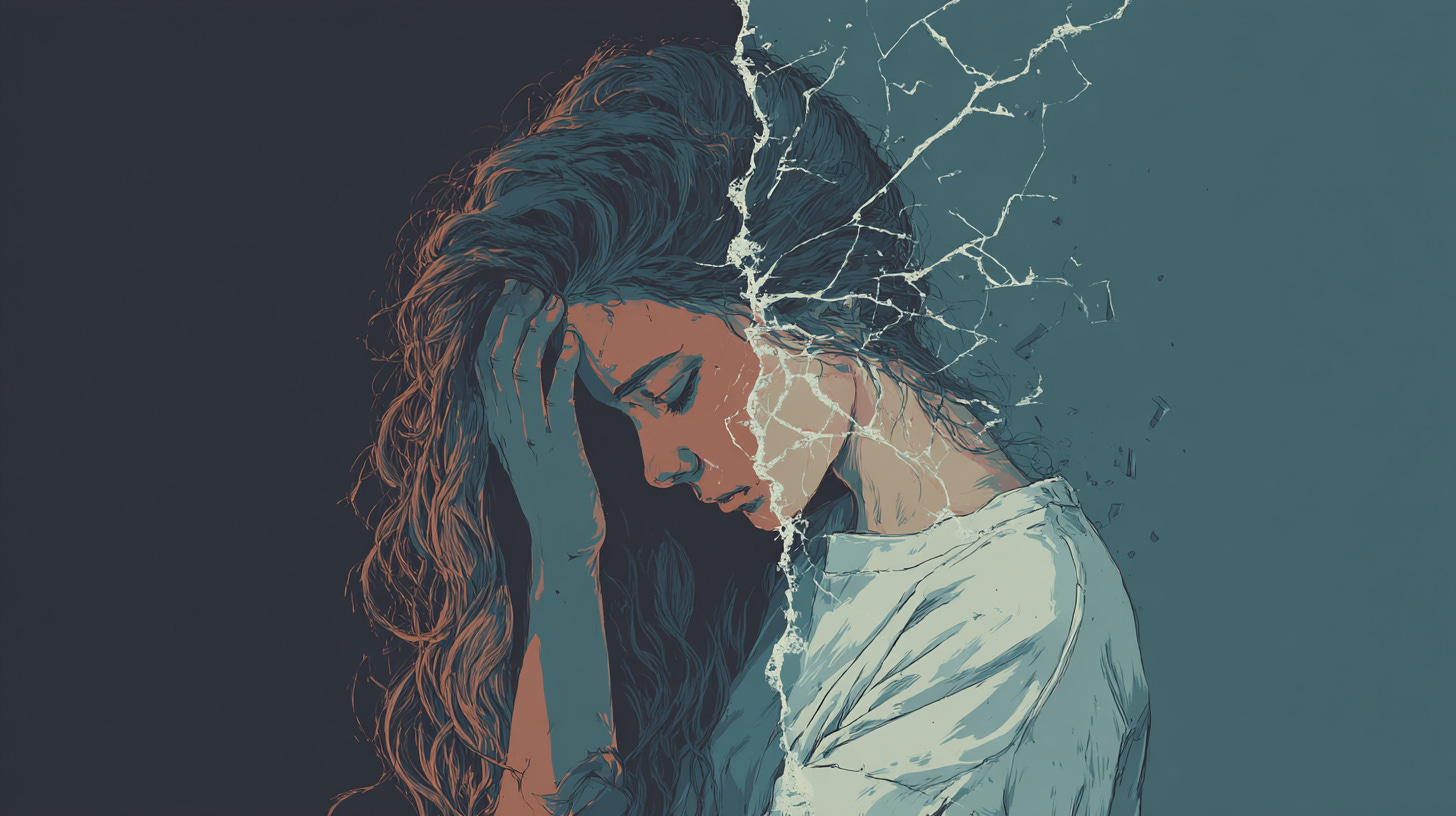
Heartbreak is not a metaphor. It is a neurological event.
The Same Region. The Same Signal.
In 2011, a team of researchers at Columbia University ran a study that changed how neuroscientists think about social pain. They recruited people who had gone through an unwanted breakup within the past six months and put them in an fMRI machine.
First, they applied a hot probe to the subjects’ forearms. Physical pain, measurable and controlled. Then they showed them photos of their ex-partners and asked them to think about the rejection.
The brain scans looked almost identical.
The same regions that lit up for physical pain lit up for heartbreak. Not similar regions. Not nearby regions. The same ones. The secondary somatosensory cortex. The dorsal posterior insula. Both are deeply involved in processing the sensation of physical pain on the body.
The brain does not distinguish between a burn and a breakup. It files them under the same category.
The Withdrawal Problem
Here is where it gets harder to sit with.
When two people form a close bond, the brain’s opioid system activates. Natural painkillers. The same system that responds to morphine. Being with someone you love, physically close, emotionally connected, is partly a chemical experience. Your brain is dosing itself.
When that person disappears, the dosing stops.
What follows is not just sadness. It is withdrawal. The restlessness, the inability to sleep, the loss of appetite, the obsessive looping thoughts, all of it maps almost perfectly onto what happens in the brain during opioid withdrawal.
You are not being dramatic. You are detoxing.
Why You Can’t Stop Thinking About Them
The prefrontal cortex is the part of the brain responsible for rational thinking, perspective, and impulse control. It’s also the region that gets suppressed during intense emotional pain.
This is why you know, logically, that you are better off. And yet you text anyway. You check their Instagram anyway. You replay conversations at 2am looking for the moment things went wrong.
The rational brain has been taken offline. What’s left is the part running on habit, craving, and pattern recognition. It remembers what felt good and keeps reaching for it even when it’s gone.
This is not weakness. It is the exact same mechanism that makes any withdrawal hard to push through.
It Gets Better. Here Is Why.
The brain is not static. It rewires based on what you do and what you expose it to.
Every time you sit with the discomfort instead of reaching for your phone to check on them, you are building new circuitry. Every time you sleep, your brain is actively processing and reorganizing the emotional weight of what happened. Every new experience, new place, new conversation is laying down neural pathways that slowly compete with the old ones.
The pain does not disappear overnight because the brain does not rewire overnight. But it is always, continuously rewiring.
The people who come out of heartbreak with more clarity and self-awareness than they went in are not stronger than everyone else. Their brains just got the time and conditions to do the work.
This Thursday, paid subscribers get the full breakdown: the neuroscience of anxious attachment, why some people feel breakups harder than others, and the specific conditions that speed up the brain’s recovery process.
If this was useful, share it with someone who needs to hear that what they’re feeling is real.