

You ever make a terrible decision during an argument? Say something you immediately regret, agree to something you knew was wrong, or completely blank on a solution that would have been obvious on a normal Tuesday?
That is not a character flaw. That is cortisol doing its job, just not in the way that helps you
What cortisol is actually doing
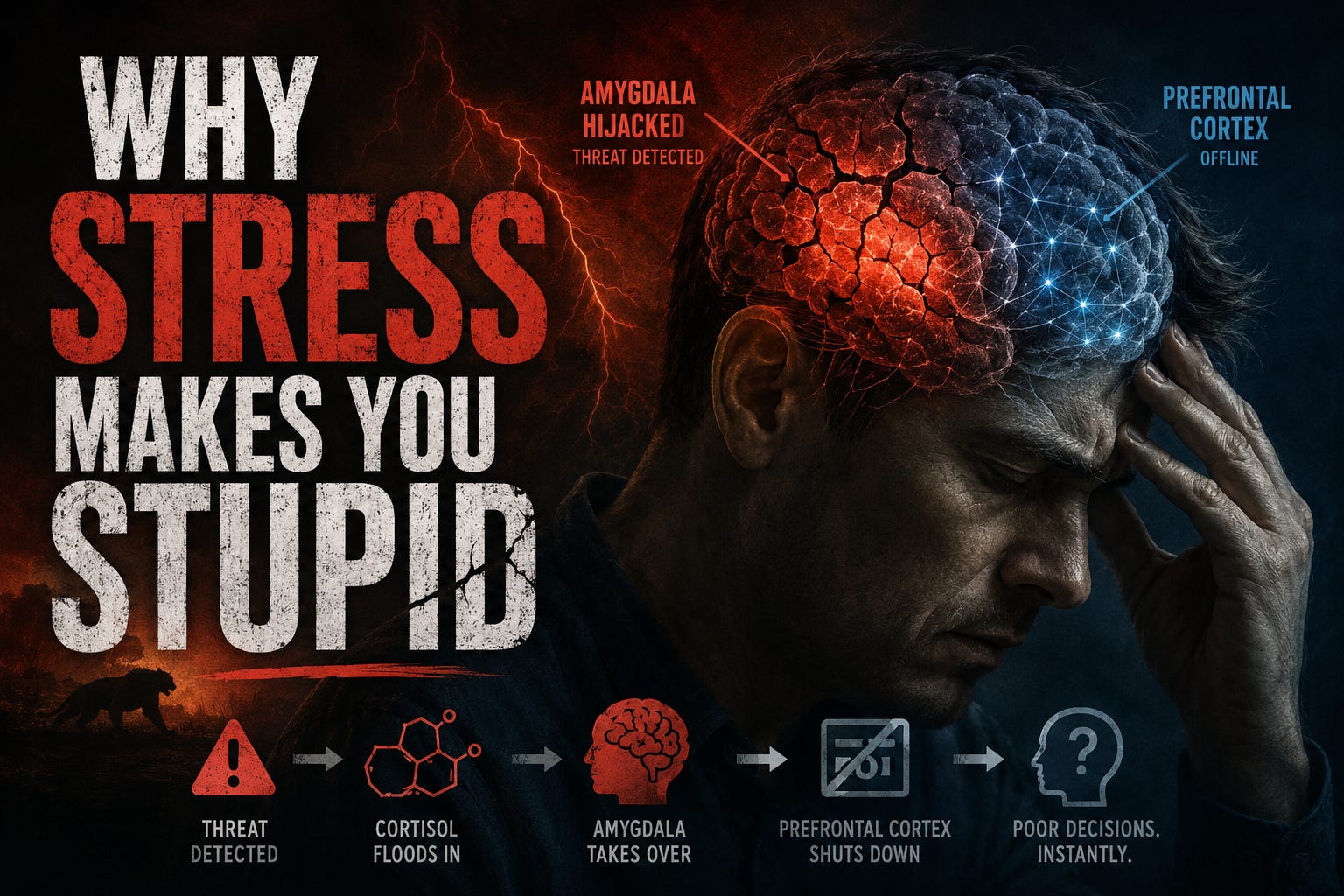
When your brain detects a threat, real or perceived, it triggers a hormonal cascade that floods your system with cortisol. The original purpose of this was survival. You do not need to deliberate when a predator is running at you. You need to move.
The problem is your brain runs the same program whether you are being chased through a savanna or sitting in a tense performance review.
Cortisol directly impairs the prefrontal cortex, the part of your brain responsible for rational thinking, impulse control, and decision-making. Research from Amy Arnsten’s lab at Yale has shown that even mild, uncontrollable stress rapidly degrades prefrontal function. The neurons there literally become less responsive. Meanwhile, the amygdala, your threat-detection and emotional-reaction center, gets more active.
So under pressure, you are running more on instinct and less on reason. You are not thinking poorly because you are weak. You are thinking poorly because your brain chemically shifted resources away from the area that does good thinking.
Why it compounds
Here is the part people miss. Cortisol does not just affect you in the moment. Chronic stress, the low-grade ambient pressure most people carry around constantly, causes actual structural changes in the prefrontal cortex over time. Research from John Radley at the University of Iowa found that repeated stress reduces the number of dendritic connections in PFC neurons. Your deliberate, rational thinking literally gets physically smaller.
This is why people who have been under sustained pressure for months often describe feeling foggy, reactive, or like they have lost the ability to think clearly. They are not imagining it.
How to come back down quickly
The physiological sigh is one of the fastest validated methods. Two quick inhales through the nose followed by a long exhale through the mouth. It reinflates the alveoli in your lungs and accelerates CO2 clearance, which directly activates the parasympathetic nervous system. Andrew Huberman has covered this extensively, and the underlying research goes back decades.
Another underrated one: naming what you are feeling. A UCLA study led by Matthew Lieberman found that putting a label on an emotion, just saying “I am anxious” or “this feels threatening,” measurably reduces amygdala activation. You are essentially letting your prefrontal cortex take a small step back into the driver’s seat.
Cold water on the face also works. The diving reflex drops your heart rate fast, and that sends a calming signal back up to the brain.
None of these are magic. But they work mechanically, not through willpower. That distinction matters because when cortisol is running the show, you do not have a lot of willpower available to spare.
The goal is not to eliminate stress. Some stress is genuinely useful. The goal is to stop letting it make decisions for you.
On Thursday, the paid version will go out to provide every day actionable steps to combat this.