

You sat at a desk for eight hours. You did not run anywhere. You did not lift anything. You barely moved. And somehow you are completely wiped out by 4pm.
This is not weakness. It is biology.
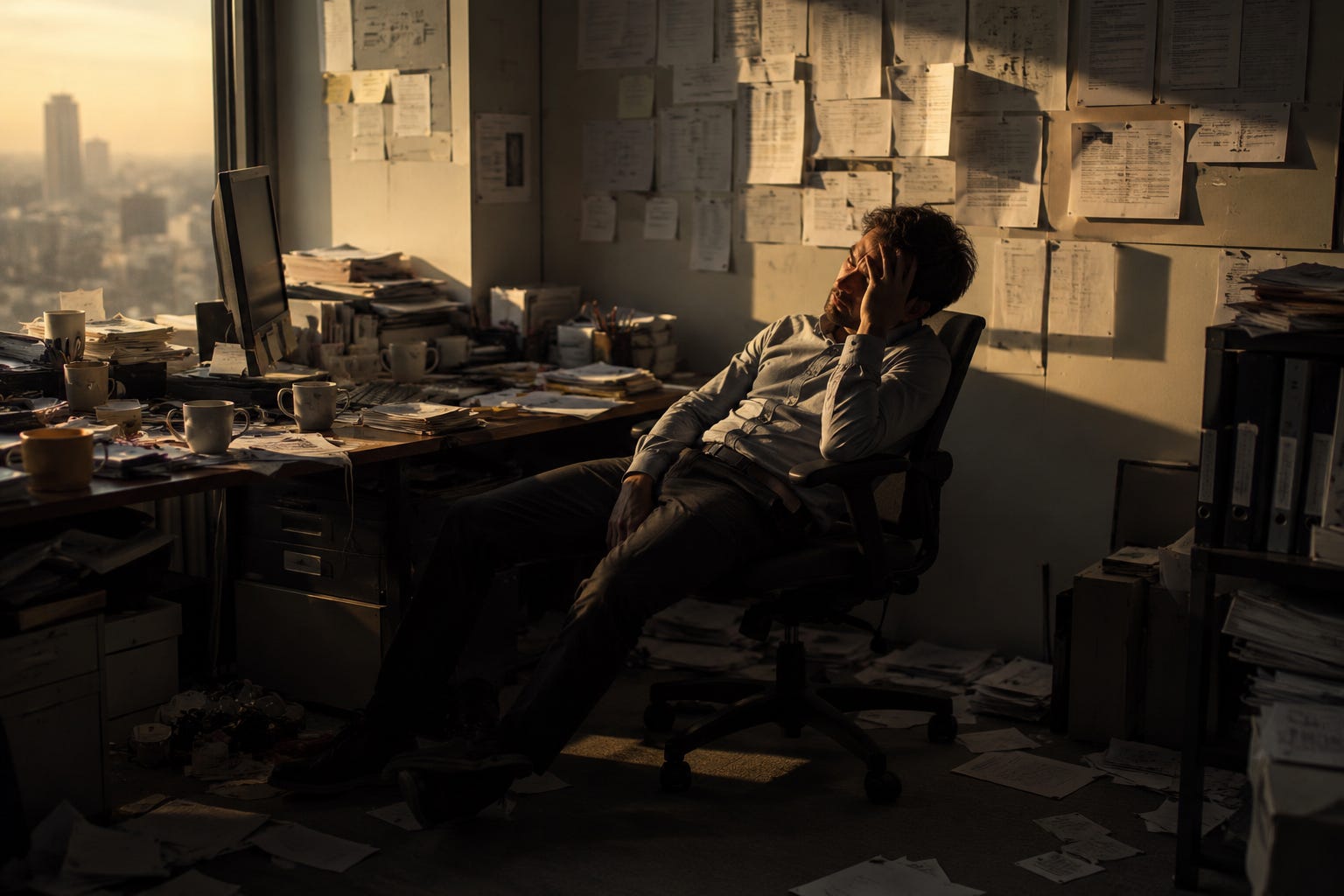
Your Brain Is an Energy Hog
The brain accounts for about two percent of your body weight and burns roughly twenty percent of your total energy. Most of that goes toward glucose metabolism. Thinking, deciding, filtering, processing information. Every decision you make, every email you evaluate, every small judgment call you navigate through the day is spending a measurable amount of metabolic fuel.
The problem is that the brain does not signal depletion the way your muscles do. Muscles get sore. They feel heavy. The brain just quietly gets worse at its job. By the afternoon you are irritable, scattered, slower to respond, and making worse decisions without realizing the quality has dropped. You think you are just tired. What is actually happening is that specific cognitive resources have been depleted.
Decision Fatigue Is a Real Thing
The research on this is called ego depletion. Every act of decision making, self-control, and deliberate thinking draws from the same limited pool of mental resources. The more you spend earlier in the day, the less you have access to later.
There is a reason judges give harsher rulings in the afternoon. There is a reason you eat worse on busy days and send emails you regret on stressful ones. The brain is not failing you. It is out of fuel for the specific type of processing that careful, considered thinking requires. And modern work environments are extraordinarily good at draining that fuel as fast as possible.
The Open Loop Problem
On top of decision fatigue, most people are carrying what researchers call high cognitive load throughout the entire day. Every unfinished task, every thing you are trying to hold in memory, every conversation you need to have and have not had yet takes up space in your working memory. Working memory has a very limited capacity and when it is full, everything feels harder than it should. You feel foggy and slow without being able to explain why.
This is why the end of a mentally demanding day can feel more exhausting than a physically demanding one. Your body is fine. Your brain has been running at capacity for ten hours and has nothing left.
Most people respond to this by pushing through. More caffeine, longer hours, grinding into the evening. The brain needs the opposite. It needs fewer decisions, closed loops, and genuine rest that does not involve feeding it more information to process.
Understanding what is actually causing the exhaustion is the first step. What you do about it is a different conversation.
Thursday’s issue covers the specific changes you can make, and most of them take less than 5 minutes to implement.